Artificial intelligence has rapidly evolved from a research-driven technology into one of the most important forces shaping modern business. Across the United States, technology companies are investing billions of dollars into data centers and computing systems designed to support increasingly complex AI applications. These investments reflect the growing demand for AI tools that can analyze large datasets, automate processes, and enhance productivity across multiple industries.
Businesses in sectors such as finance, healthcare, retail, and manufacturing are increasingly incorporating artificial intelligence into everyday operations. Banks are deploying AI-powered systems to detect fraudulent transactions, retailers use predictive algorithms to forecast consumer demand, and healthcare organizations rely on machine learning to support diagnostics and research. As these applications expand, companies must build infrastructure capable of handling the massive computing workloads required by modern AI systems.
One of the most significant drivers behind this infrastructure expansion is the rise of generative AI. Tools capable of producing text, images, video, and software code have gained widespread adoption in recent years. These systems rely on large language models that require enormous computing resources to train and operate effectively. As demand for these tools continues to grow, companies are expanding data centers designed specifically for AI workloads.
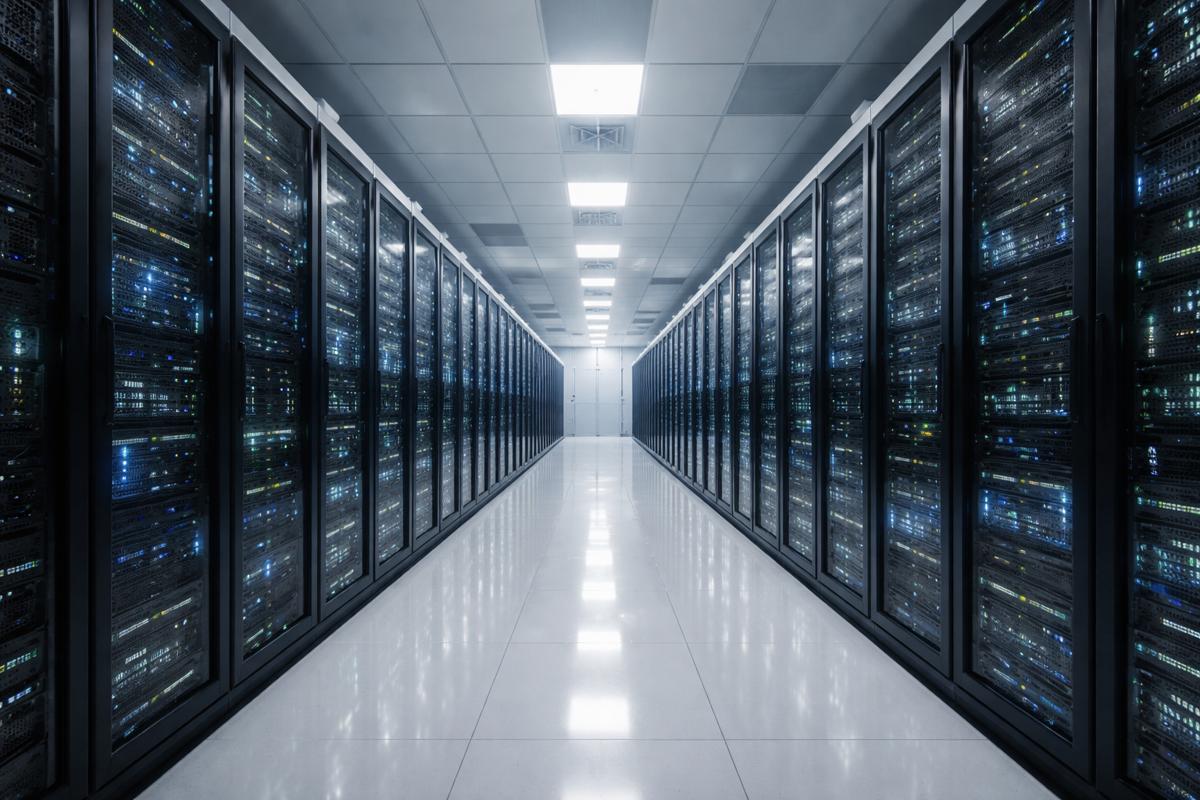
Unlike traditional cloud facilities, AI-focused data centers rely heavily on specialized processors such as graphics processing units (GPUs). These chips are designed to perform large numbers of calculations simultaneously, making them ideal for machine learning tasks. As a result, semiconductor manufacturers are increasing production of AI accelerators to meet rising demand.
Technology companies including Microsoft, Google, and Meta have all announced plans to expand their AI infrastructure significantly. New data centers are being built across multiple regions of the United States to support cloud-based AI services used by businesses and developers worldwide. Industry analysts believe these investments will shape the competitive landscape of artificial intelligence for years to come.
However, the rapid expansion of AI infrastructure presents several challenges. One of the most significant concerns is energy consumption. Data centers require enormous amounts of electricity to power computing clusters and maintain cooling systems designed to prevent overheating. As AI workloads grow more demanding, energy requirements are expected to increase significantly.
To address these concerns, many technology companies are investing in renewable energy sources and exploring new cooling technologies designed to improve efficiency. Some data centers are experimenting with advanced liquid cooling systems that reduce power consumption while maintaining optimal performance.
Supply chain issues also remain a potential obstacle for the AI industry. The global demand for high-performance chips has surged, creating shortages in some areas. Semiconductor manufacturers are expanding production capacity, but building new fabrication plants can take years.
Despite these challenges, analysts believe AI infrastructure investment will continue accelerating in the coming years. Businesses increasingly view artificial intelligence as a strategic asset capable of improving efficiency, reducing costs, and creating new opportunities for innovation.
As AI becomes more deeply integrated into the global economy, the development of scalable computing infrastructure will play a crucial role in determining which companies and countries lead the next wave of technological transformation.
Sources:
https://techcrunch.com/2026/02/28/billion-dollar-infrastructure-deals-ai-boom-data-centers-openai-oracle-nvidia-microsoft-google-meta/
https://www.reuters.com/business/us-ai-startups-see-funding-surge-while-more-vc-funds-struggle-raise-data-shows-2025-07-15/