
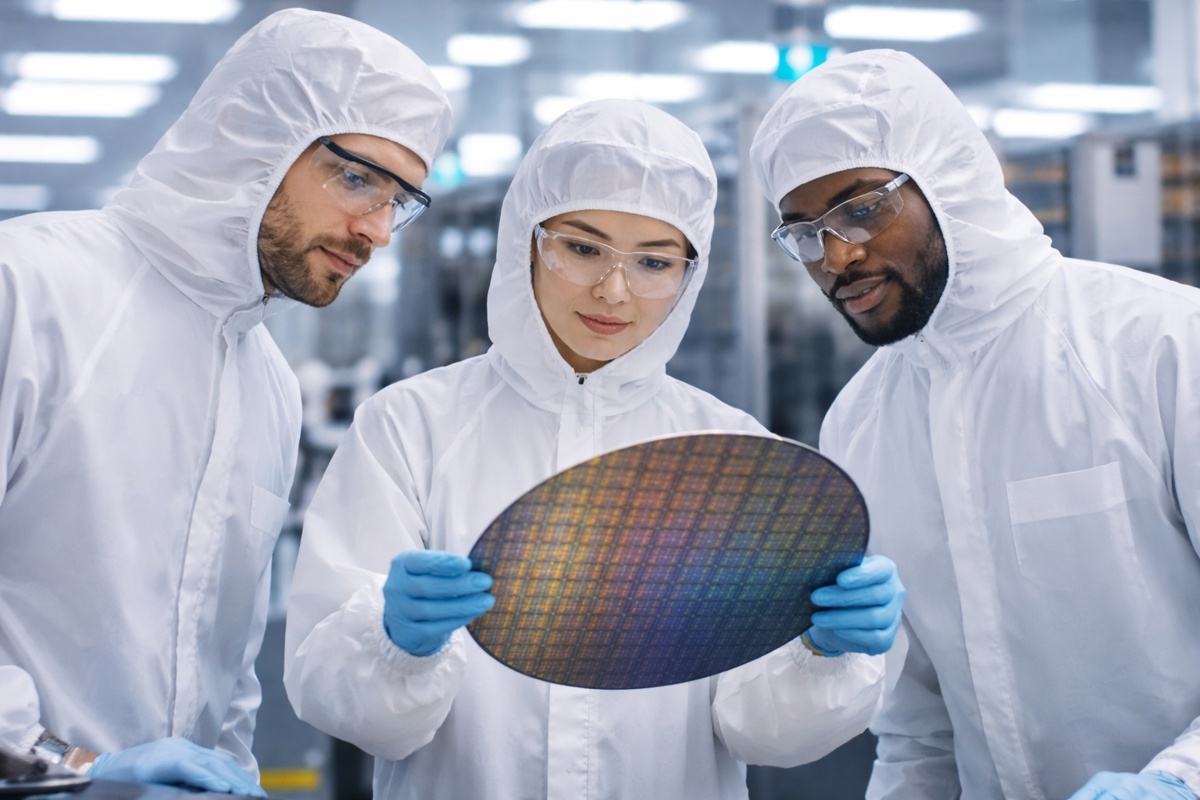
The U.S. semiconductor industry is accelerating construction of new manufacturing facilities as companies respond to rising demand for advanced chips used in artificial intelligence, cloud computing, and consumer electronics.
Several major chipmakers have confirmed progress on multi-billion-dollar fabrication plants across the United States. These projects are designed to strengthen domestic chip production and reduce reliance on overseas manufacturing.
Industry leaders say the expansion reflects both economic opportunity and national security concerns.
Over the past decade, the majority of semiconductor manufacturing has taken place in Asia. However, recent supply chain disruptions and geopolitical tensions have encouraged governments and companies to rebuild domestic production capacity.
In the United States, federal incentives and industry partnerships have helped accelerate new chip manufacturing projects.
Technology companies are particularly focused on producing advanced processors capable of supporting AI applications and high-performance computing. These chips power data centers, autonomous systems, and next-generation consumer devices.
Construction of semiconductor fabrication plants is one of the most complex industrial projects in the world. Facilities require highly controlled environments, specialized equipment, and billions of dollars in investment.
Once operational, these factories will produce wafers containing thousands of microchips. Each chip is manufactured through an intricate process involving photolithography, chemical deposition, and precision etching.
Executives say domestic manufacturing will help reduce supply chain vulnerabilities while creating high-skilled jobs in engineering and manufacturing.
Local governments and universities are also partnering with semiconductor companies to develop workforce training programs designed to support the growing industry.
Demand for chips continues to expand across multiple sectors. Automakers require advanced processors for driver-assistance systems, while consumer electronics companies rely on chips for smartphones, laptops, and smart devices.
Meanwhile, the rapid growth of artificial intelligence applications has significantly increased demand for specialized processors designed for machine-learning workloads.
Despite the optimism, industry analysts warn that building new semiconductor plants requires long timelines and careful coordination across suppliers.
Even after construction is completed, it can take years for facilities to reach full production capacity.
Still, the current wave of investment signals a long-term commitment to strengthening the U.S. semiconductor ecosystem.
As new plants come online, the United States could regain a larger share of global chip manufacturing while supporting the continued growth of the technology sector.
Sources
https://www.reuters.com/technology/us-chipmakers-expand-domestic-manufacturing
https://www.cnbc.com/2025/10/18/semiconductor-fabs-us-expansion.html
https://www.wsj.com/tech/chips/us-chip-manufacturing-investment