
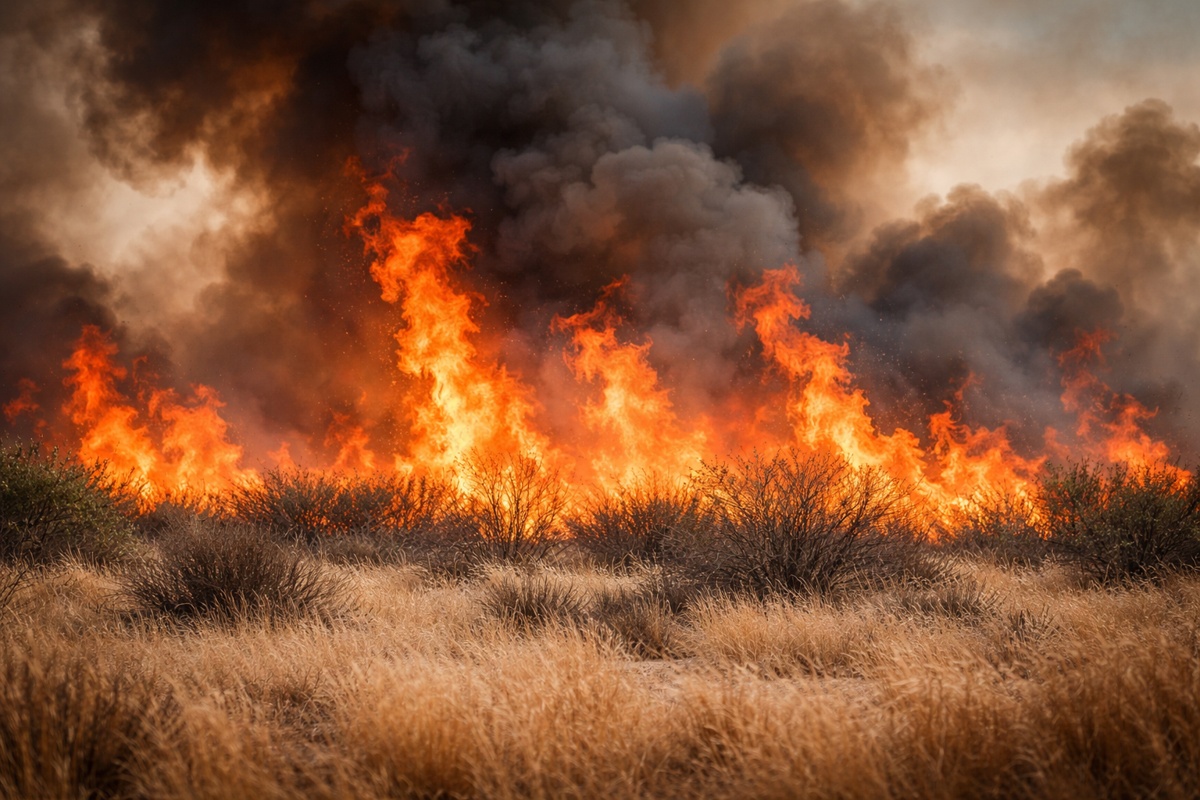
Federal agencies have introduced a new wildfire prevention strategy aimed at reducing fire risk across forests in the western United States. The plan focuses on forest management techniques designed to limit the spread of large-scale wildfires.
Wildfires have intensified in recent years due to drought, rising temperatures, and dense forest conditions. Environmental experts say decades of fire suppression policies have allowed excess vegetation to accumulate in many forests. This buildup can act as fuel during wildfire events.
The new strategy emphasizes controlled burns and mechanical thinning to reduce vegetation density. These practices mimic natural fire cycles that historically kept forests healthier and less prone to catastrophic fires.
Officials also plan to expand wildfire monitoring systems using satellite data and advanced predictive models. These technologies help fire managers identify high-risk areas and respond more quickly when fires start.
Community protection remains a key part of the strategy. Federal agencies will work with local governments to improve evacuation planning, emergency response systems, and wildfire-resistant infrastructure.
Environmental scientists say proactive forest management can significantly reduce wildfire severity. When forests are less dense, fires tend to burn at lower intensities and spread more slowly.
As climate conditions continue to increase wildfire risks, policymakers are prioritizing prevention rather than relying solely on emergency response. The new federal strategy represents one of the largest coordinated wildfire prevention efforts in recent years.
Sources
https://www.fs.usda.gov/managing-land/fire
https://www.nifc.gov/fire-information
https://www.nytimes.com/2026/01/14/climate/wildfire-prevention-plan.html